

Why We Skip the Beach Every July
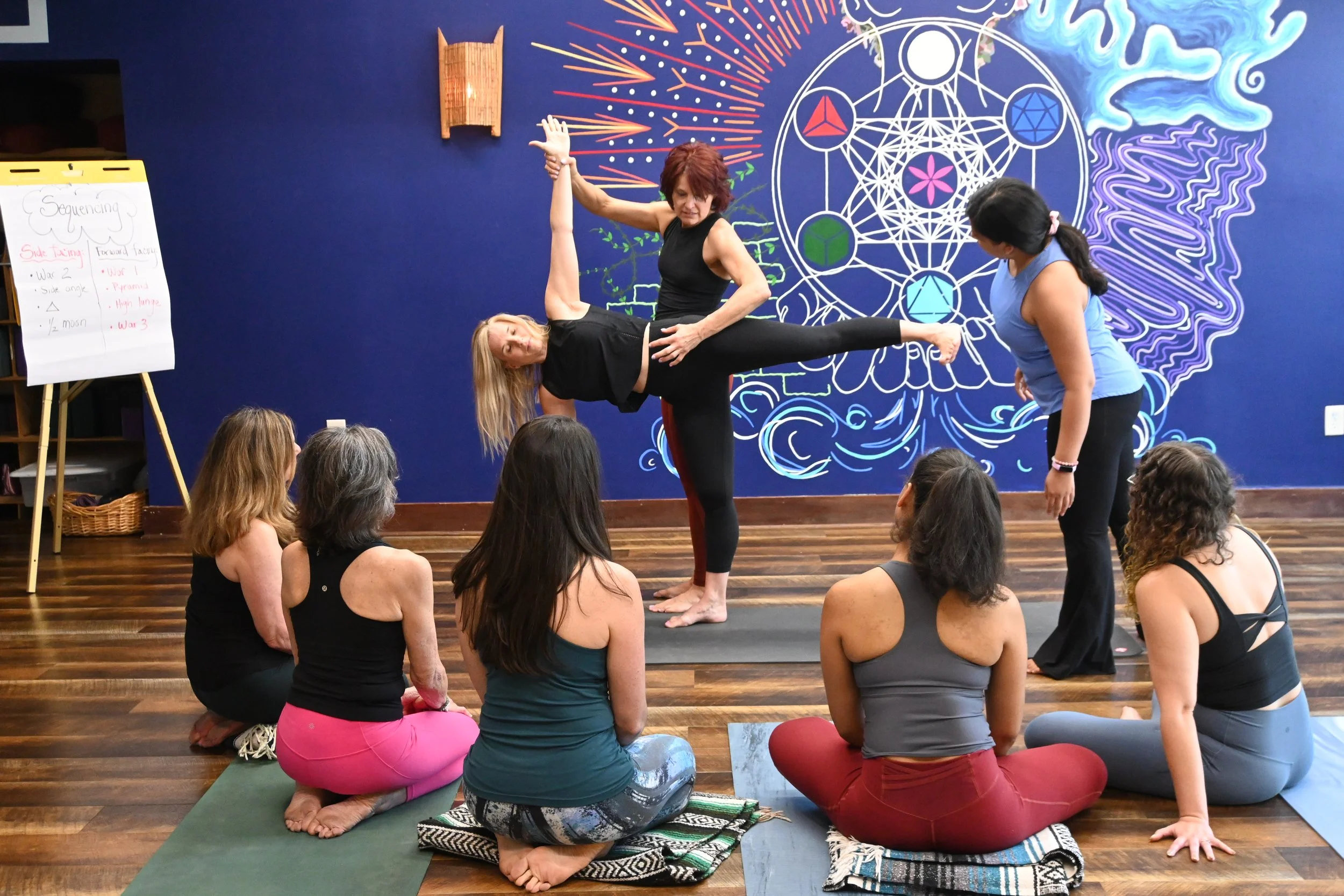
“Why would you spend your summer doing this?"
Every July, while many people are heading to the beach, my fellow teacher trainers and I do something that surprises even us.
We lock ourselves inside a yoga studio for two weeks.
It's hot on Rockville Pike. Lunches are shared with mosquitoes. Some years we've trained through record-breaking heat. Every year someone asks us, "Why would you spend your summer doing this?"
The answer is simple. Because we get to be in the room where it happens.
Not the room where people memorize poses. The room where people become a little more themselves.
After teaching hundreds of teachers over the years, I can tell you something with complete confidence. Every cohort surprises us. Every single one.
We tell students before we begin that this training is about much more than learning to teach yoga. They politely nod. Then two weeks later they look at us with that expression every trainer loves—the one that says, "I had no idea."
People often assume yoga teacher training is about flexibility, anatomy, sequencing, Sanskrit, philosophy, and learning how to lead a class. But that's only the surface.
The real curriculum is learning how to meet yourself.
One student arrived terrified of public speaking. The first time he stood in front of the room, his hands shook.
He taught anyway. Not because his fear disappeared. Because his sankalpa—his heartfelt intention to be present and teach yoga became stronger than his fear.
That is yoga.
Another student realized she had spent years holding her breath without realizing it. Instead of accepting it, she walked up to one of the trainers and simply said,"It stops now. Teach me."
Watching someone decide to change is one of the most extraordinary moments a teacher ever witnesses.
And one of the most jaw dropping experiences that I ever had in training…A student challenged nearly everything I taught. Honestly, I wasn't sure we'd agree on much. During our Kriya Yoga module, I asked everyone to try one deceptively simple practice. Here it is:
When something creates resistance...
Pause. For 3 seconds.
Bring your attention into your senses.
Notice your body.
Don't suppress your reaction.
Don't force yourself to be positive.
Simply don't decide what you're going to do until those three seconds have passed.
Again.
Again.
Again.
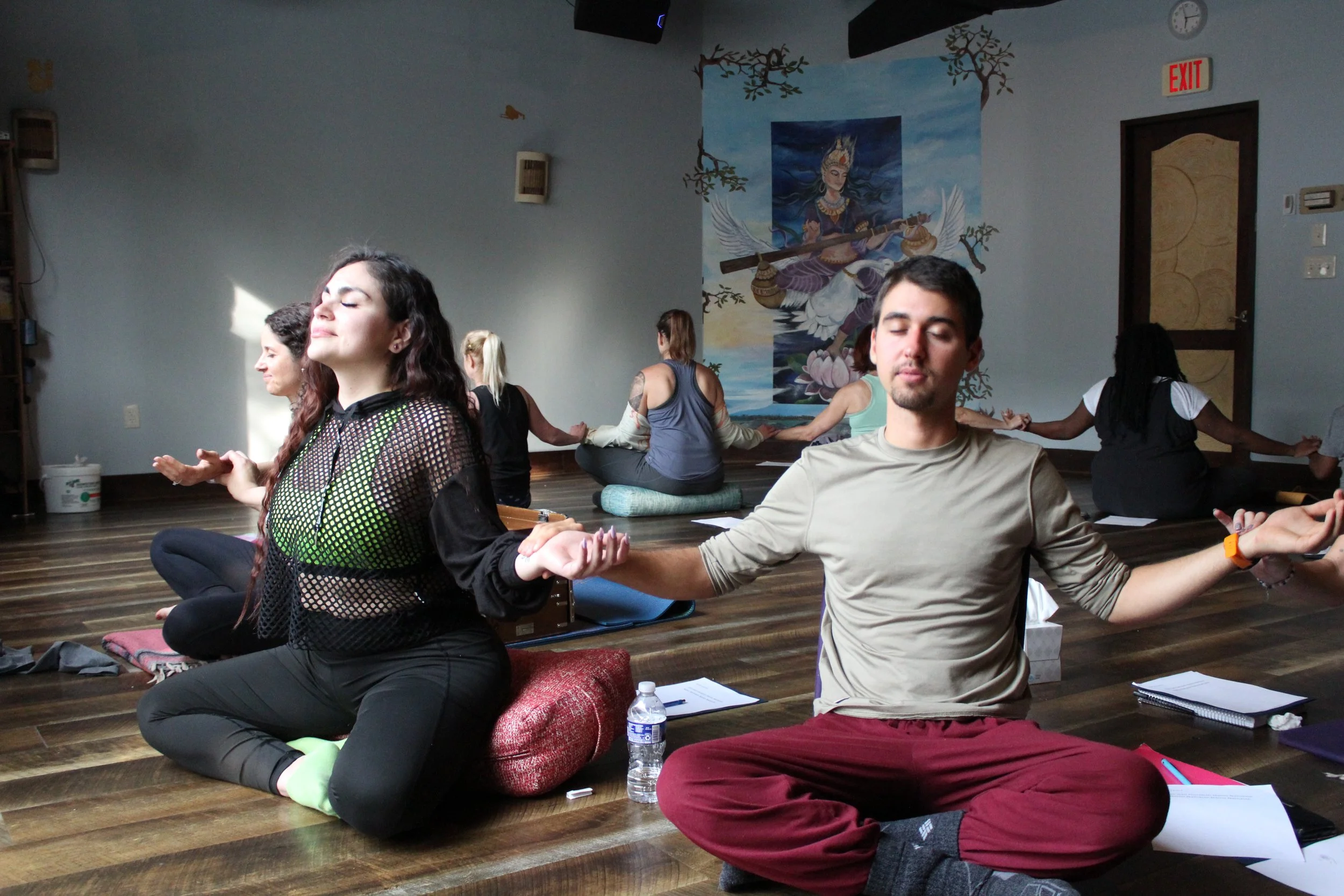
It is a practice of interrupting automatic reactions
before they become suffering.
Months after the training, I received a letter.
The student wrote that she had spent two years trying to become pregnant. She had tried nearly everything. She admitted she practiced the 3-second exercise because she wanted to prove me—and yoga—wrong.
Instead, she found herself falling in love with the practice.
Several weeks after she started the practice she became pregnant. Turns out that nothing she tried to get pregnant was working.
Now let me be absolutely clear.
Thrive Yoga did not make someone pregnant.
Yoga cannot promise that.
What changed was something much more personal.
She described softening her constant effort, loosening the grip of fear, and experiencing greater ease in her body and nervous system.
Whether or not that shift played any role medically isn't something any honest trainer can claim.
But the shift itself was real.
And sometimes the deepest transformation begins long before any outward result appears.
One of my favorite memories wasn't even during practice.
It happened during our Science of Breathing module.
Each team had to defend which part of the breathing system was "most important."
The nose.
The lungs.
The diaphragm.
The room exploded with costumes, ridiculous skits, laughter, debates, and dramatic courtroom arguments defending the honor of the nose.
No one remembers who "won."
Everyone remembers laughing so hard they cried.
And strangely enough… They never forgot how breathing works.
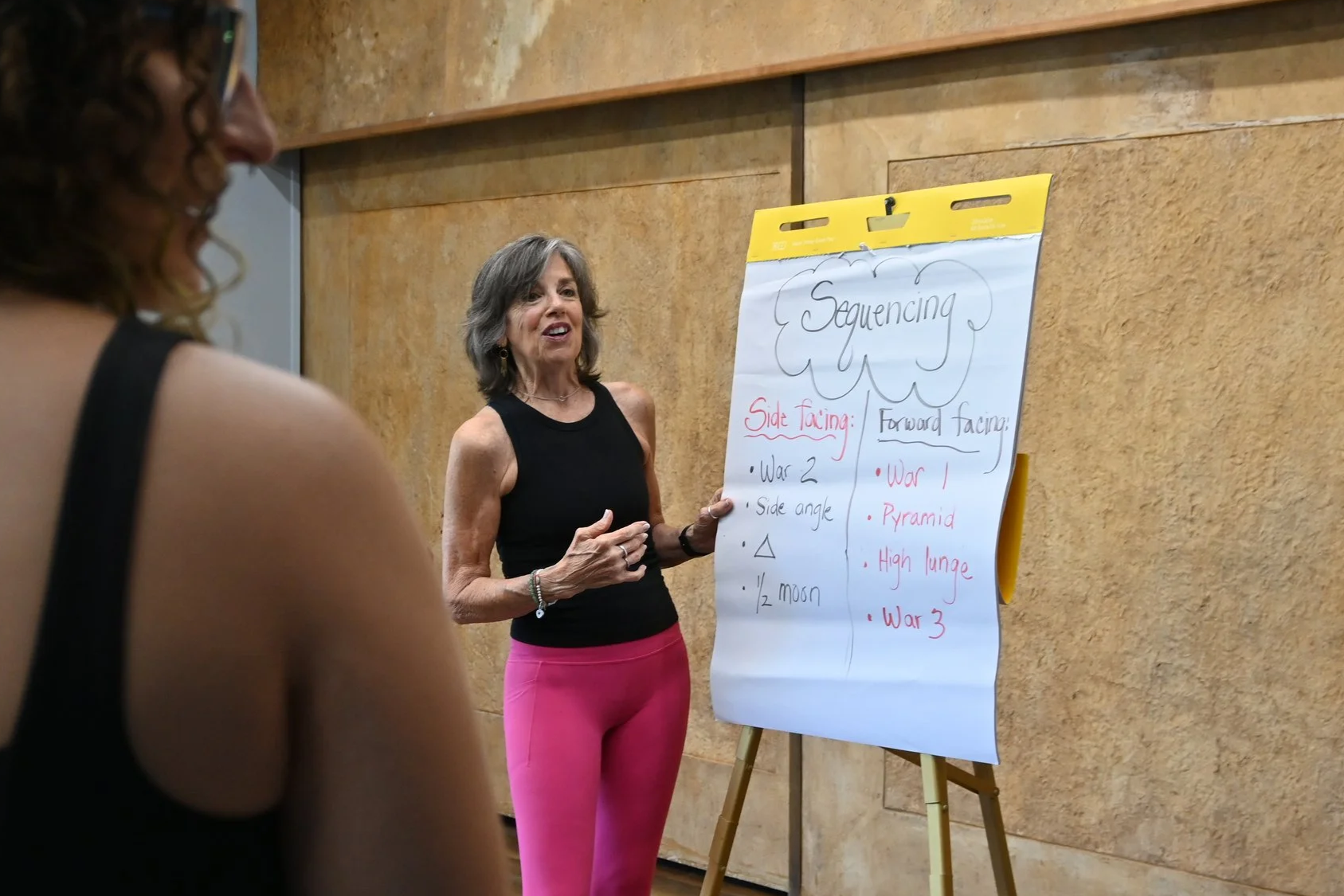
That is the beauty of experiential learning.
You don't simply remember information.
You remember who you were while learning it.
This is what yoga has always pointed toward.
Not accumulating more knowledge or performing a more impressive pose or collecting another certificate.
The practices invite us to interrupt our automatic patterns long enough to actually experience being alive.
Modern neuroscience increasingly supports what contemplative traditions have explored for centuries: intentionally directing attention, cultivating interoceptive awareness, and practicing regulation can influence how we respond to stress and shape habitual patterns of thought and behavior. While yoga is not a cure-all, many of its practices are associated with improvements in stress regulation, emotional well-being, and autonomic nervous system function when practiced consistently.
That is different from passing an exam. It is different from achieving the perfect posture.
It is learning to participate in your own life.
Every Summer Blast 200 Hour Yoga Teacher Training, reminds the trainers and students alike
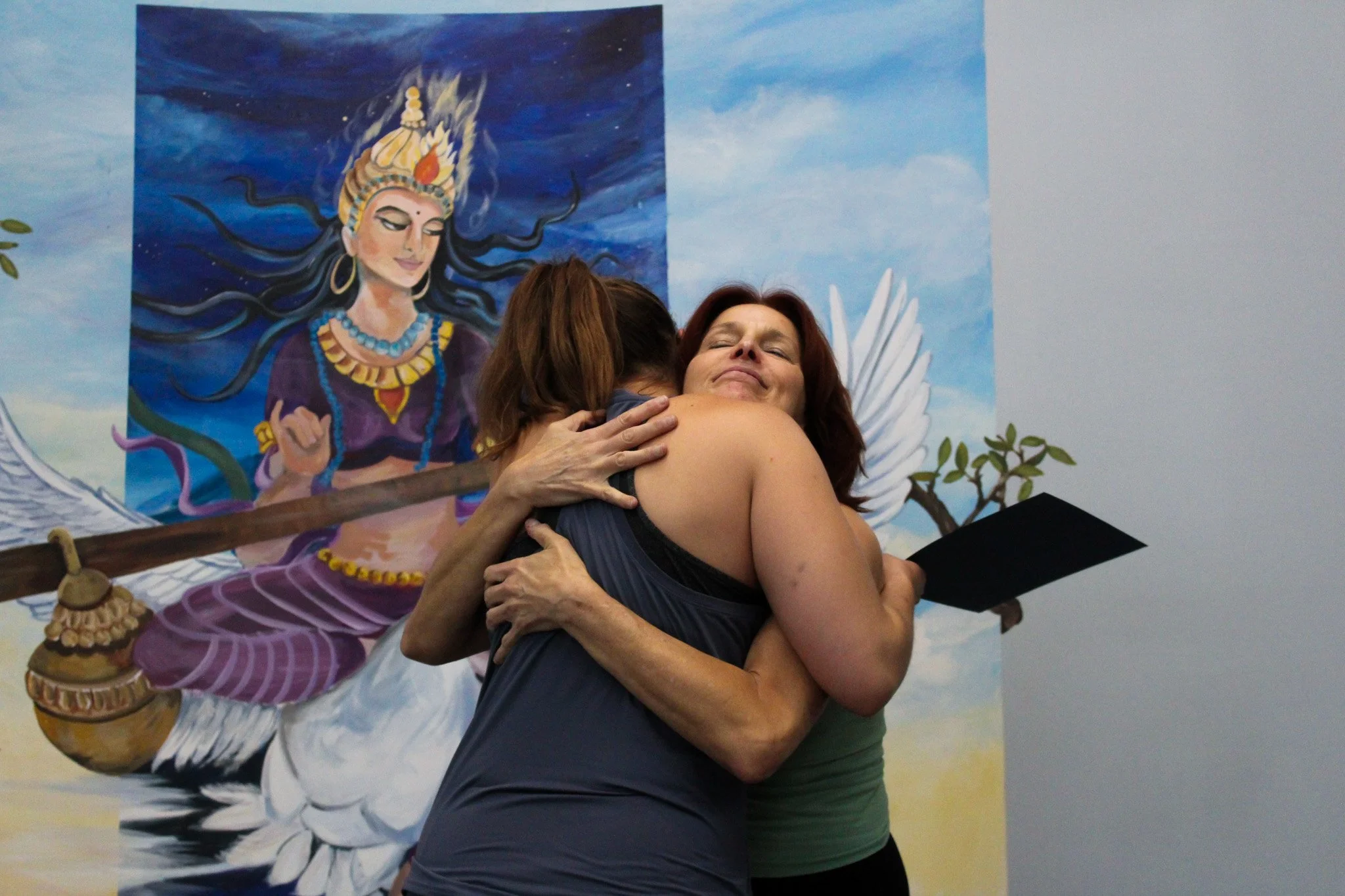
Life is not happening after we become certified. It is not waiting after the perfect pose.
Life is already here.
Sometimes it appears in a shaky first class.
Sometimes in three quiet seconds.
Sometimes in a student finding her breath.
Sometimes in a room full of adults dressed as giant noses.
That is why we skip the beach every July.
Watching people discover more life inside the life they already have is one of the greatest privileges we know.
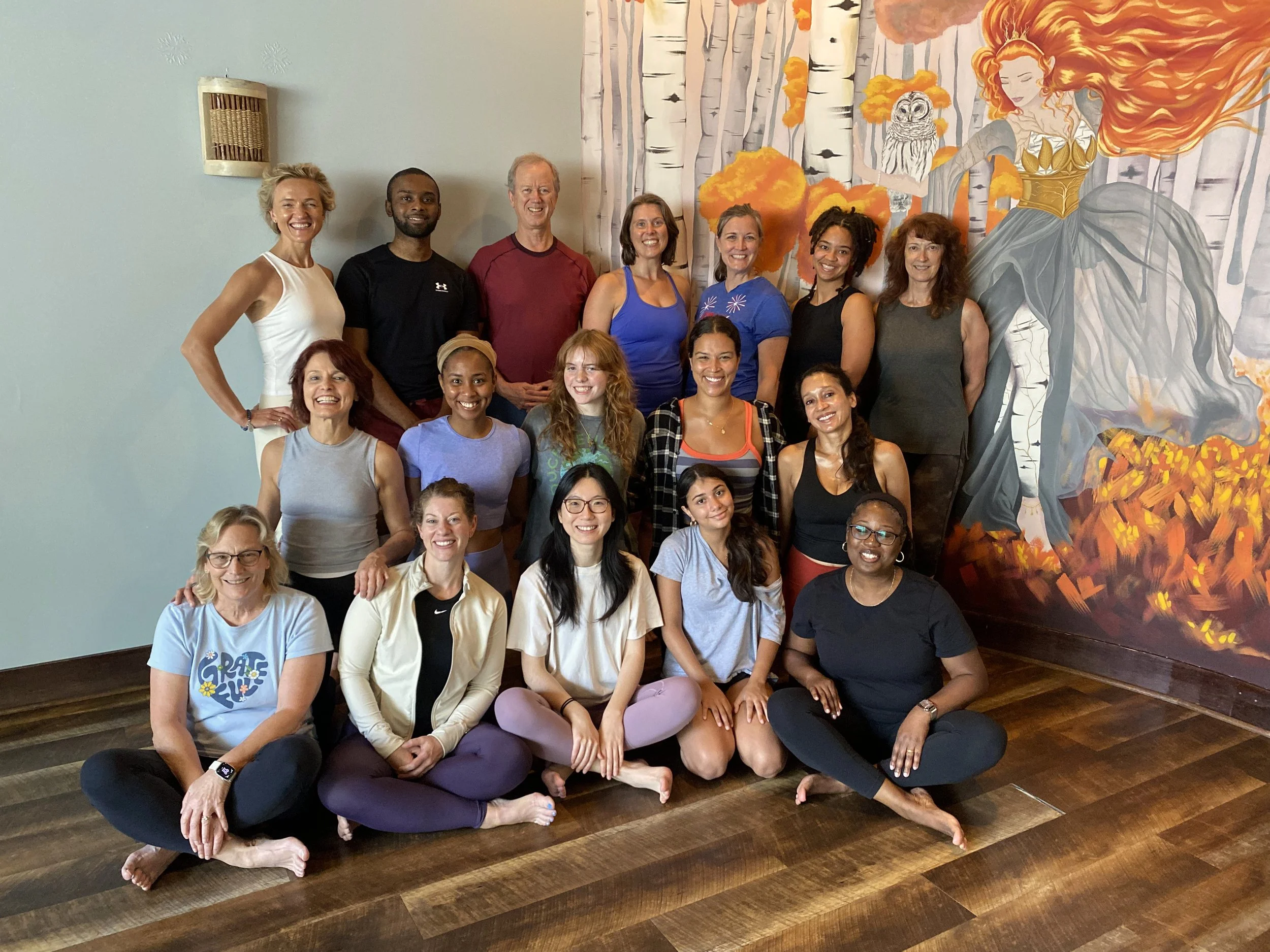
If readers want to explore the science further, these are excellent places to begin:
Gard, T., Noggle, J. J., Park, C. L., Vago, D. R., & Wilson, A. (2014). Potential self-regulatory mechanisms of yoga for psychological health.Frontiers in Human Neuroscience. This paper proposes how yoga develops self-regulation by integrating attention, interoception, breathing, movement, and emotional regulation.
Schulz, A., & Vögele, C. (2015). Interoception and Stress.Frontiers in Psychology. A foundational review explaining how awareness of internal bodily sensations is closely linked with stress regulation and overall well-being.
Khalsa, S. B. S. (2013). Yoga for Psychiatry and Mental Health: An Ancient Practice with Modern Relevance.Indian Journal of Psychiatry. A concise review by Harvard researcher Sat Bir Khalsa describing the growing evidence for yoga in supporting mental health and stress resilience while acknowledging its appropriate limitations.
